
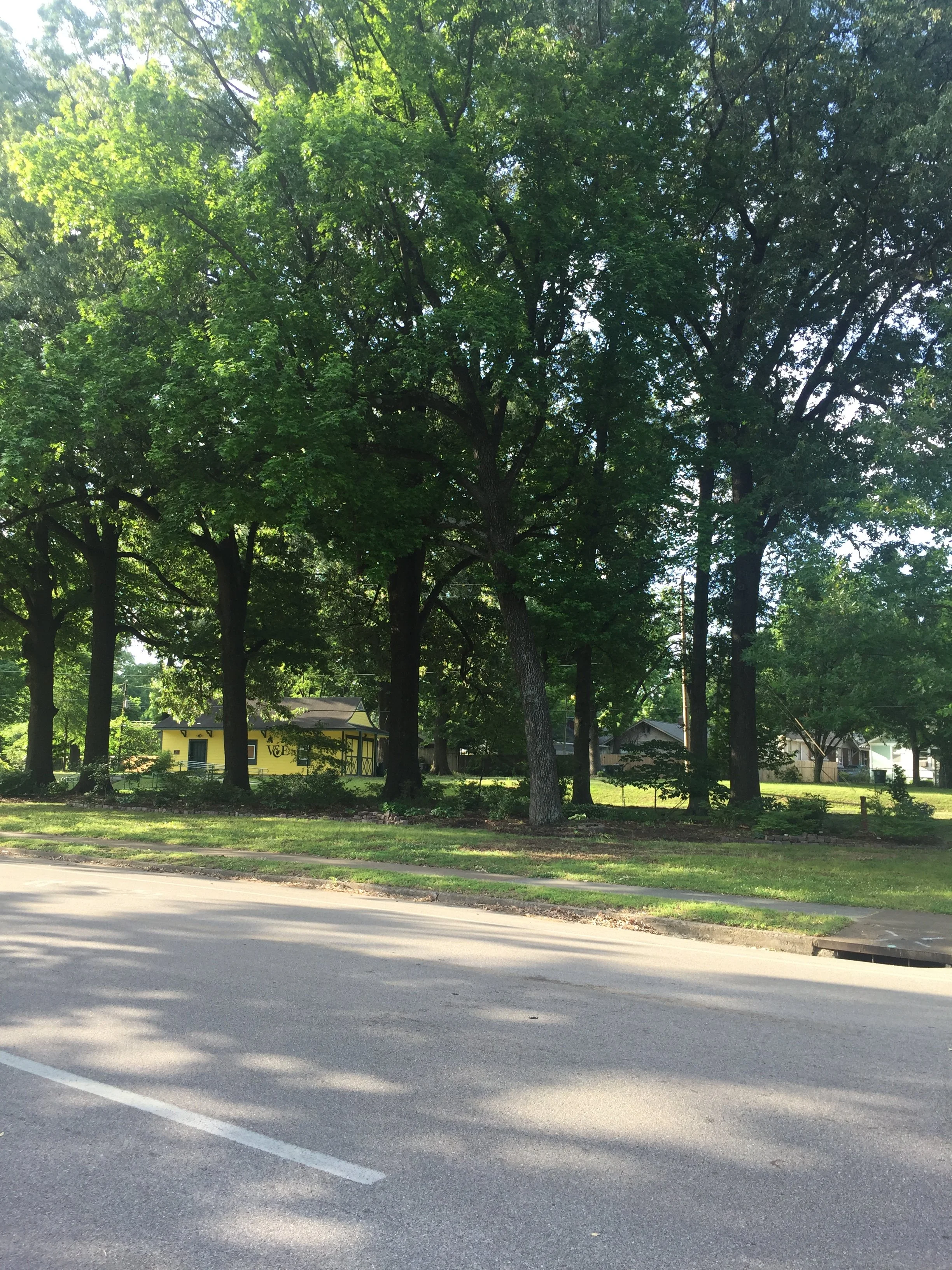
How trees benefit our community
Trees are an important part of the V&E Greenline. Thousands of trees line the trail from end to end and our Arboretum is an example of how important it is for us to understand and protect them.
Trees provide a number of important benefits to all of us - whether you walk on the trail or not - and they are also crucial to wildlife of all types especially birds and pollinators. Here are ten ways that trees benefit all of us.
Trees Improve Your Health: Trees promote a feeling of well-being and calm.
Trees Clean The Air: Trees naturally remove carbon dioxide and pollutants from the atmosphere making our air cleaner, fresher and healthier.
Trees Reduce Flooding and Clean Our Water: Trees prevent excessive runoff during storms allowing water to soak into the ground instead of going into a storm drain. When water can soak into the ground it is cleaned and eventually it becomes a part of our water supply.
Trees Sequester Carbon which Reduces Global Warming: Trees take in carbon dioxide from the air which helps mitigate human effects on our climate.
Trees Cool Our Community: Areas with tree canopies are cooler overall which makes everyday tasks more enjoyable and helps reduce electricity consumption for air conditioning.
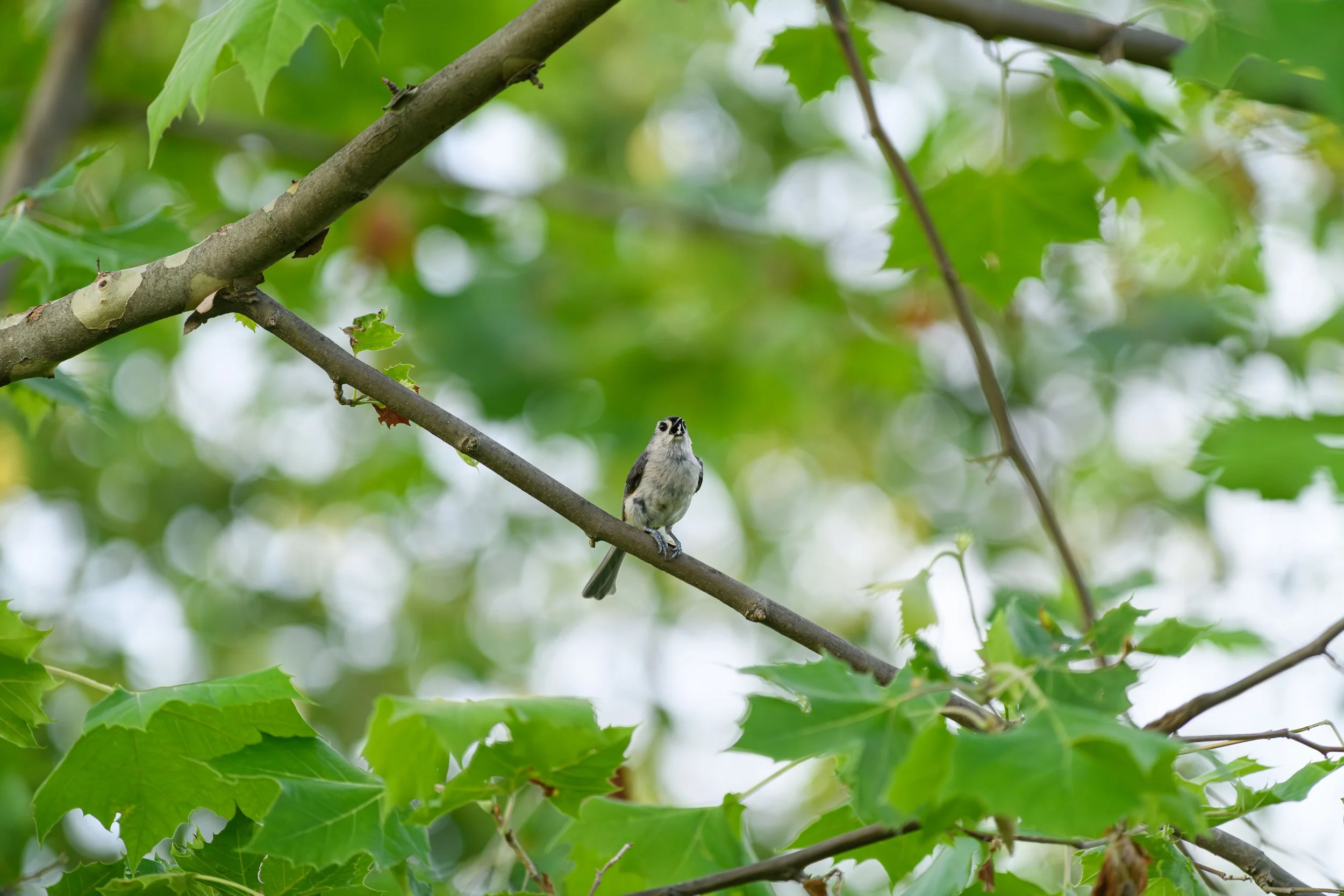
Trees Provide Food and Shelter for Wildlife and Pollinators: Birds, mammals and insects all rely on trees for different parts of their life cycles. Many of our trees are hosts to at-risk pollinators.
Trees Promote Community: Trees build a sense of place in an area and can be ways to bring together diverse individuals in a common effort.
Trees Improve Home Values: Homes in areas with trees benefit from improved aesthetics and economics which improve their value.
Trees Boost Our Local Economy: Trees improve home values and quality of life indexes which have a direct impact on our economy
Trees are Beautiful!
Tree Benefit Tags
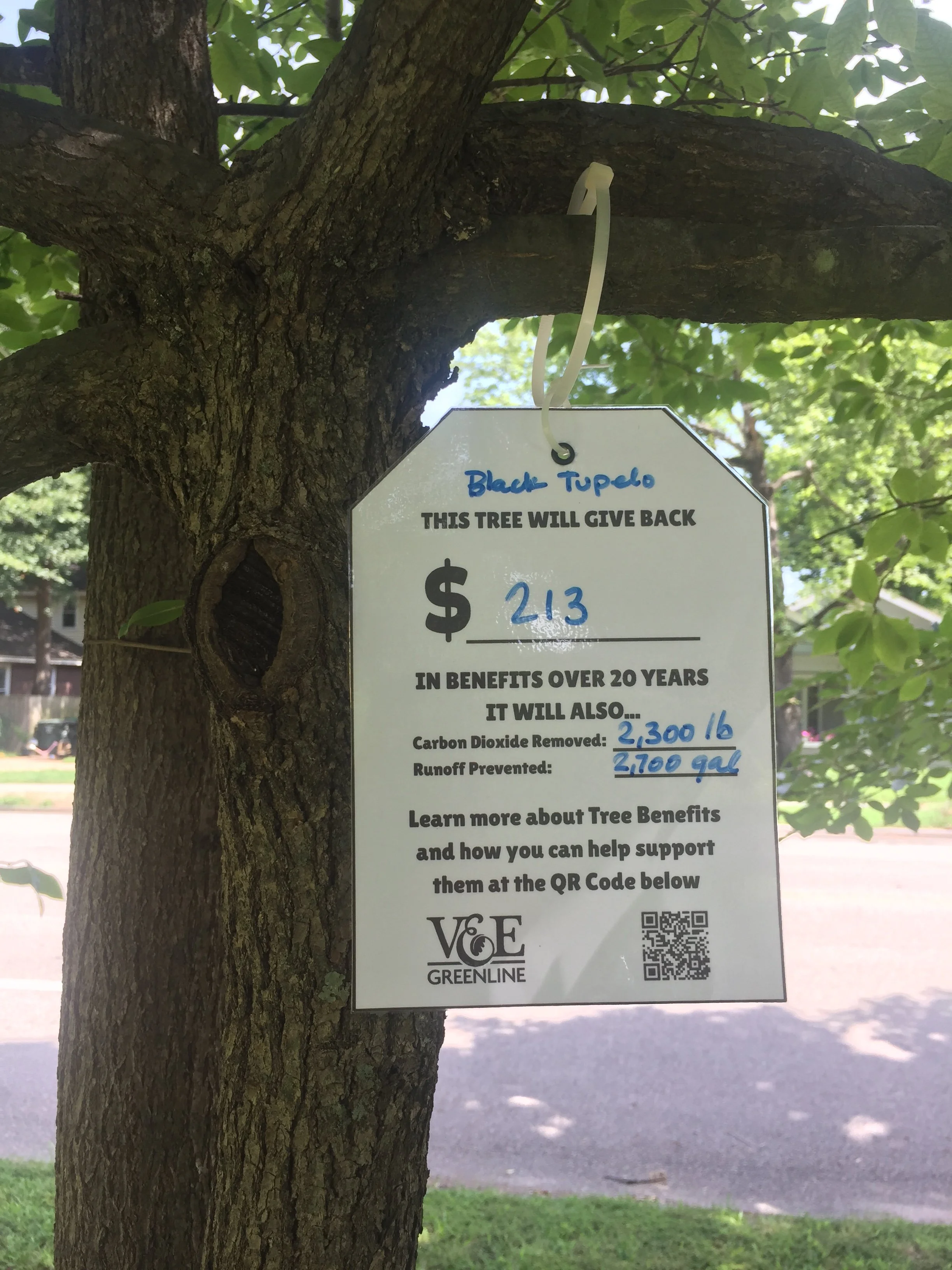
In late 2025 and early 2026, volunteers and our Rhodes College Intern Charity Berhe completed a limited tree inventory which involved inspecting and measuring over 60 trees along the trail. These measurements, along with species information and GPS locations were entered into the iTree Tool provided by the US Forestry Service which calculates the environmental and economic benefits of trees. Additional data was gathered about each species including where it is from and the benefit it provides to wildlife. This data will be used for a variety of programs including Tree Benefit Tags which are placed on selected trees along the trail.
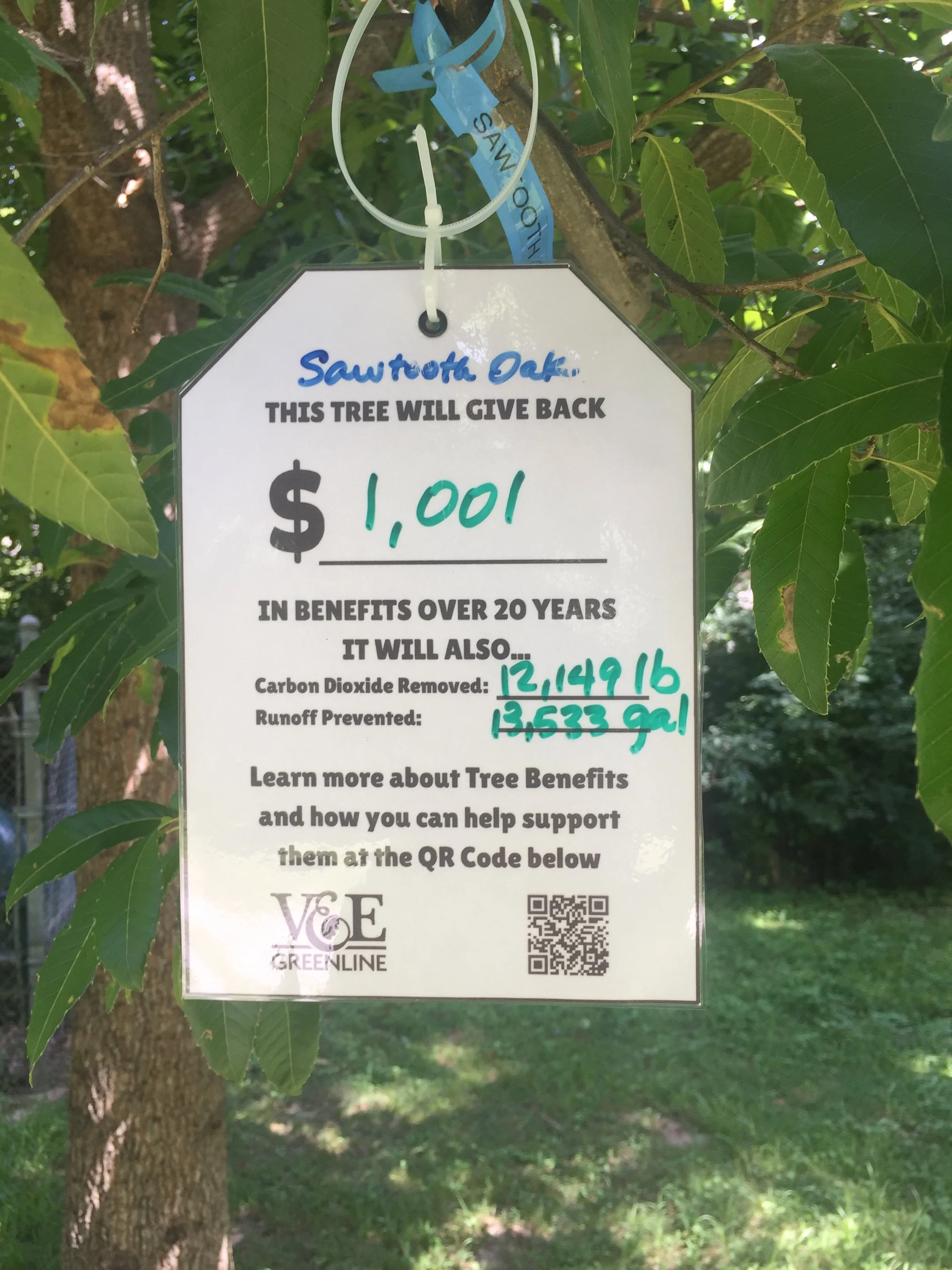
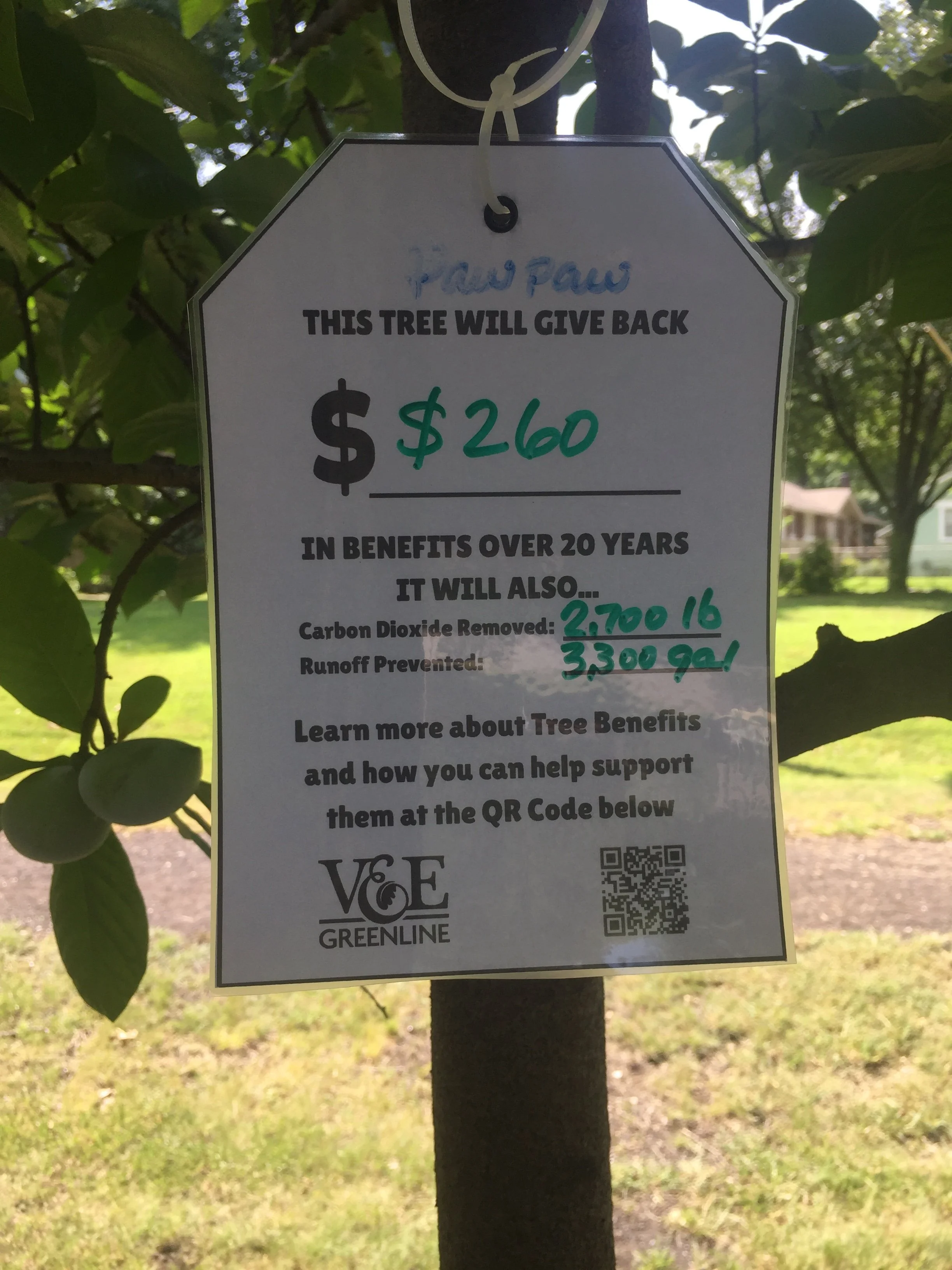
These tags give a snapshot of the value of the tree in real terms and are designed to encourage protecting the trees we have and for all of us to plant more trees wherever we can. The following is a selection of the calculations we have done:
Quercus acutissima, Sawtooth Oak - Measures: 36 inches Origin: Asia
Birds and squirrels eat the acorns. Supports many butterflies and moths.
20 Year Benefit: $1,001.00 CO2 Equivalent: 12,149.00 lb Runoff Prevented: 13,533.32 galAcer saccharinum, Silver Maple - Meaures: 88.5cm Origin: Eastern & Central North America
Supports Imperial Moth (Eacles imperialis) larvae. Early spring source of nectar for bees. Squirrels, chipmunks and birds eat the seeds.
20 Year Benefit: $920.32 CO2 Equivalent: 10,345.33 lb Runoff Prevented: 5,007.79 galUlmus americana, American Elm - Measures: 88.0cm Origin: Eastern North America
20 Year Benefit: $1,157.95 CO2 Equivalent: 12,655.50 lb Runoff Prevented: 17,268.19 galLiriodendron tulipifera, Tulip Poplar - Measures: 55.5cm Origin: Southern Ontario to North Central & Eastern United States
Larval host plant for Eastern Tiger Swallowtail (Papilo glaucus).
20 Year Benefit: $933.44 CO2 Equivalent: 10,123.61 lb Runoff Prevented: 7,811.93 galBetula nigra, River Birch - Measures: 54.5cm Origin: Central & Eastern United States
Host plant for Mourning Cloak (Nymphalis antiopa) butterfly. Birds and squirrels eat the catkins.
20 Year Benefit: $1,019.48 CO2 Equivalent: 13,114.51 lb Runoff Prevented: 9,990.94 galQuercus pagoda, Cherrybark Oak - Measures: 93.5cm Origin: Eastern Central & South East United States
Birds and small mammals eat the acorns. Supports many moths and butterflies.
20 Year Benefit: $860.84 CO2 Equivalent: 8,677.16 lb Runoff Prevented: 15,834.46 gal
Totals
For just the 60 trees we included in our inventory, the values total:
Economic Benefit: $24,148.86
CO2 Equivalent: 257,497.04 lbs (27.2 gasoline-powered passenger vehicles driven for one year)
Runoff Prevented: 296,952.34 gal (over 3 million 12 ounce water bottles)
Data Set
You can view our entire data set for all of the arboretum trees here.
Learn more about tree benefits from the National Wildlife Federation and the Arbor Day Foundation.
Did You Know? Oak species are hosts for over 400 different species of pollinators.
How You Can Help
Volunteer to help take care of our trees or to help remove invasive species
CARE FOR THE TREES YOU HAVE AT HOME OR PLANT A TREE IN YOUR YARD!